Find the Bugs
Before Hackers Do
CloviScan detects code vulnerabilities, exposed files, server weaknesses, and security headers — and tells you exactly how to fix them. Free for 3 scans per month.
One platform for your whole attack surface — site security, repository security, SEO, performance and accessibility. Point-solution code scanners only see your source. CloviScan also scans your full git history for secrets that were committed and later removed but are still recoverable.
/config.js — line 23
CRITICAL
/phpmyadmin
HIGH
From Surface to Source Code
Other scanners check what's visible. CloviScan goes four layers deep — analysing your external footprint, your actual source code, your server configuration, and then showing you exactly how to fix everything it finds.
External Website Audit
Your site's public-facing security profile, examined from the outside — exactly as a security researcher or attacker would see it. No access credentials required.
- SSL/TLS certificate validity, grade, and cipher strength
- Security headers: CSP, HSTS, X-Frame-Options, Referrer-Policy, Permissions-Policy
- DNS health: SPF, DKIM, DMARC, open resolvers
- Exposed admin files:
.env,wp-config.php,.git/config - Google Safe Browsing check + IP reputation score
Static Code Security Analysis
We analyse your actual source files for patterns that indicate future vulnerabilities — not just known CVEs, but the dangerous code habits that create breaches. This is what other scanners skip entirely.
- Hardcoded API keys and secrets in source files
- SQL injection patterns in query builders and ORMs
- XSS-vulnerable input handling (innerHTML, eval, dangerouslySetInnerHTML)
- Unprotected CSRF routes and missing token validation
- Outdated dependencies with known CVEs via lockfile analysis
- Insecure redirects and open redirect vulnerabilities
Server Hardening Audit
Your server configuration is as important as your code. CloviScan audits the underlying infrastructure — SSH, firewall rules, open ports, and protection services — for dangerous defaults and gaps.
- SSH hardening: root login status, port exposure, key-only vs password auth
- Firewall rule coverage and unexpected allow rules
- Open ports that expose databases, admin panels, or internal tools
- Outdated software versions: PHP, Node.js, MySQL, nginx, OpenSSH
- Fail2ban, ModSecurity, and intrusion protection status
AI-Powered Autofix
Finding problems is the easy part. CloviScan goes further — every issue comes with a plain-English explanation, copy-paste code fix, and step-by-step server instructions so your team can resolve it today, not next sprint.
- Plain-English explanation of every vulnerability found
- Copy-paste code fix for all code-level issues
- Step-by-step remediation for server and config issues
- Auto-apply option for safe, low-risk fixes with one click
- Priority scoring so you fix critical issues first
- Re-scan confirmation after each fix is applied
String interpolation in your database query lets an attacker pass SQL commands instead of an ID. This can expose your entire database with a single request.
db.query(
  'SELECT * FROM users WHERE id = ?',
  [req.params.id]
);
A Bug Today is a Breach Tomorrow
Every major breach starts as a small, overlooked code issue. Here's how a hardcoded API key becomes a catastrophic security event — and how CloviScan breaks the chain.
The Hidden Bug
A developer hardcodes an API key directly in a config file. It looks harmless. The test suite passes. The code ships to production.
The Crawler Finds It
An automated bot scans GitHub repositories and public websites for exposed secrets around the clock. Within hours of your deploy, your API key is being actively tested on the dark web.
The Breach
Attackers use your exposed key to spin up compute instances, exfiltrate your customer database, or send thousands of spam messages — all billed to your account.
CloviScan catches this at Step 1 — before the crawler ever runs.
Scan Your Code NowOne Scan, Whole-Site Coverage
Every scan runs the full check library across your site, code, and server — and returns a graded report in under a minute.
See What’s Hiding in Your Site
Enter any website URL and watch CloviScan run through 6 security categories in real time. No account required.
The Cost of Finding Out Too Late
Most vulnerabilities sit in production for weeks before a customer finds them. Here is what that timeline looks like — and how CloviScan collapses it to minutes.
A missing CSP header or exposed path goes live with a routine deploy. No one notices.
Automated bots scan exposed endpoints around the clock. Your domain ends up on a target list.
A user posts publicly. A 1-star review mentions “security concerns.” Now it is a reputation problem too.
All-hands fire drill, sprint disruption, possible breach disclosure.
Same deploy, same issue. But a CloviScan scheduled scan runs within 24 hours of the change.
You get an email: “New finding — missing Content-Security-Policy. Severity: medium.” With the fix attached.
Developer applies the copy-paste nginx config. CloviScan re-scans and confirms clean. No customer saw the issue.
Scheduled scans maintain a security baseline. New issues surface within hours, not weeks.
Real Rendering.
No Theater.
Static scanners read your HTML like a document. They miss everything that happens after the page loads — scripts that run, beacons that fire, resources injected at runtime.
CloviScan’s Detonate feature spins up an isolated browser session, loads the target URL exactly like a real visitor, and captures what actually executes — including runtime-injected malware, hidden trackers, and fingerprinting scripts that never appear in your source.
- ✓Isolated browser — your real IP is never exposed
- ✓Captures network requests made by JavaScript at runtime
- ✓Detects supply-chain attacks injected via third-party scripts
- ✓Safe detonation — suspicious URLs never run on your infrastructure
“Static scanners check what your code says it does. Detonation checks what it actually does.”
Illustrative example of what Detonation catches vs static-only scanning
How CloviScan Compares
Honest, feature-by-feature — no asterisks. Generic security tools go deep on infrastructure but ignore SEO and performance. SEO audit tools check rankings but skip security entirely. CloviScan covers full site health in one scan.
| Capability | CloviScan | Generic security tools | SEO audit tools |
|---|---|---|---|
| SSL/TLS grade + expiry alerts | |||
| Security headers audit | |||
| Runtime detonation scanning | Enterprise only | ||
| SEO audit (meta, crawlability) | |||
| Performance metrics (FCP, LCP) | Some tools | ||
| Plain-English findings + copy-paste fixes | Technical output only | Partial | |
| Scheduled re-scans + change alerts | |||
| Free tier available | Limited | Limited | |
| AI-suggested remediation steps |
Common Questions
Security Embedded Across Your Stack
CloviScan feeds its findings into the tools you already use — so security stays on the radar everywhere, not just in a quarterly audit report.
Start Free, Scale as You Grow
No credit card required to start. All plans include AI-powered remediation advice — not just a list of problems.
- Instant scan, no card
- Website audit (SSL, headers, DNS)
- Google Safe Browsing check
- Email-gated deep report
- Plain-English findings
- Continuous monitoring
- DMARC / DKIM / SPF audit
- PDF reports
- Email alerts
- 10 domains monitored
- Daily scans
- Full DMARC / DKIM / SPF audit
- Malware detection + detonation engine
- Core Web Vitals
- PDF reports + Slack alerts
- 3 team seats
- API access
- White-label reports
- Unlimited domains
- Real-time monitoring
- All Starter features
- REST API access
- White-label PDF reports
- Custom scan schedules
- 10 team seats
- Priority SLA
Also available: Lite $19/mo for solo sites and Agency $299/mo for multi-site client pools. See all plans →
Pairs With the Rest of Your Site Toolkit
Security is one layer of site health. CloviScan shares findings with sibling tools for performance, accessibility, SEO, and automation — one login, one dashboard.
Your First Scan is Free
No credit card. No installation. Paste your domain and get a full security report in under 60 seconds.
Free forever plan · No installation · Results in 60 seconds
Explore the CloviTek suite
One connected AI business OS. Every tool below works on its own — and even better together.
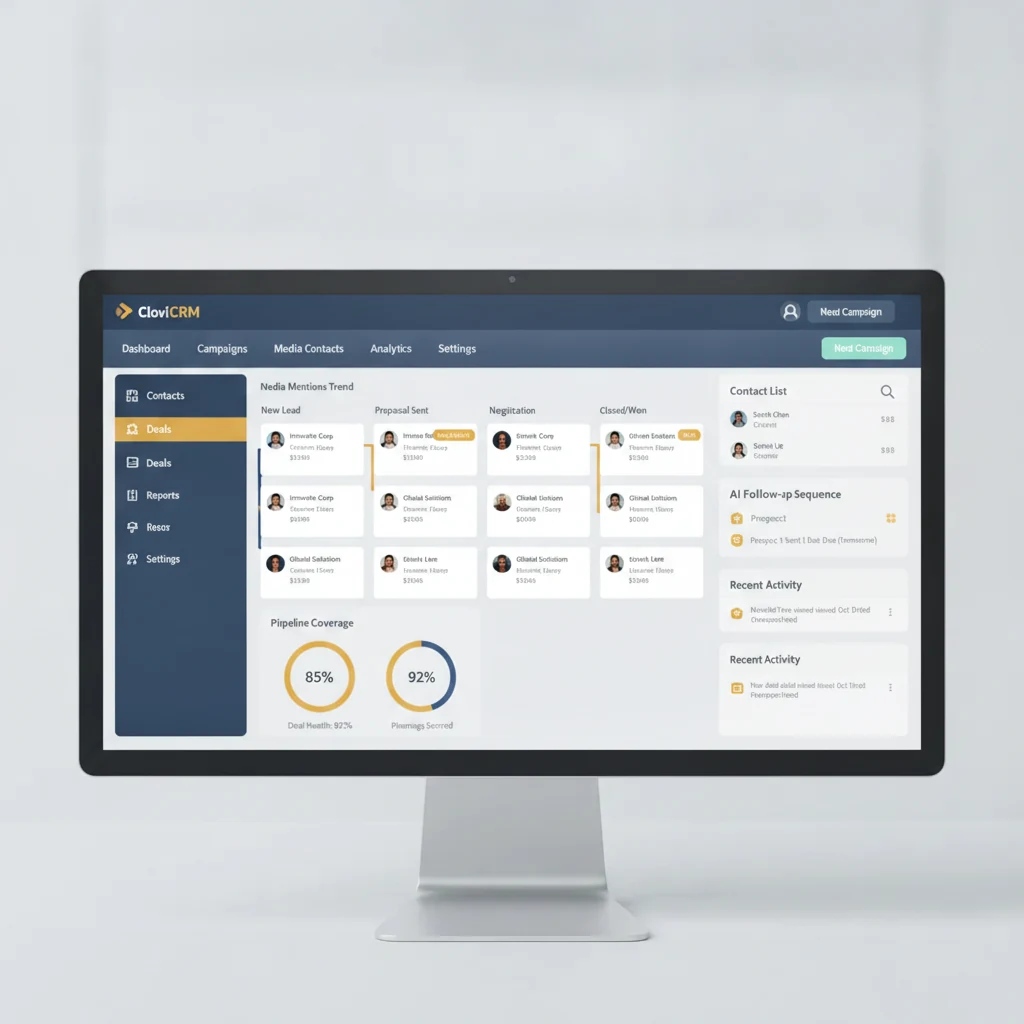 CloviCRM →One contact store to raise and operate on.
 CloviSEO →AI SEO that actually moves rankings.
 CloviForms →AI form builder for smarter intake.
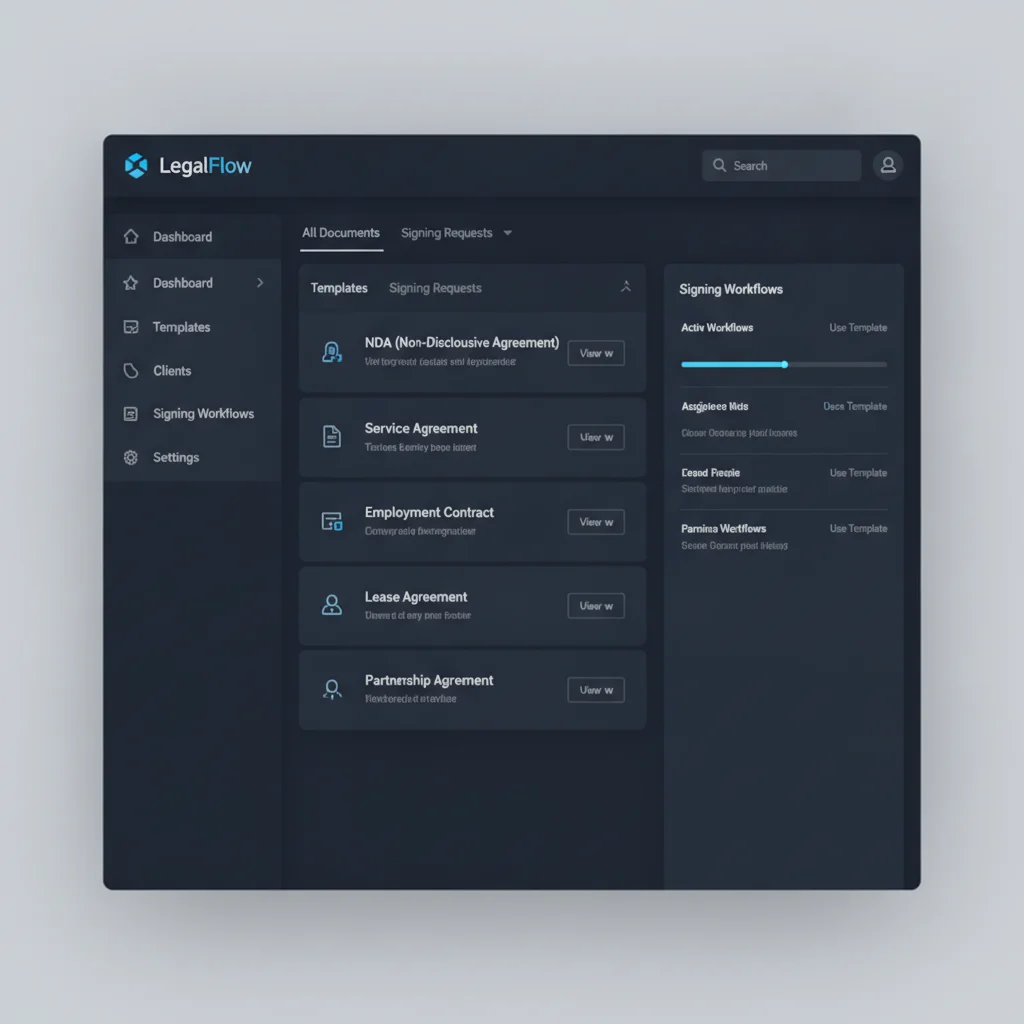 CloviLegal →AI legal OS — draft and sign in minutes.
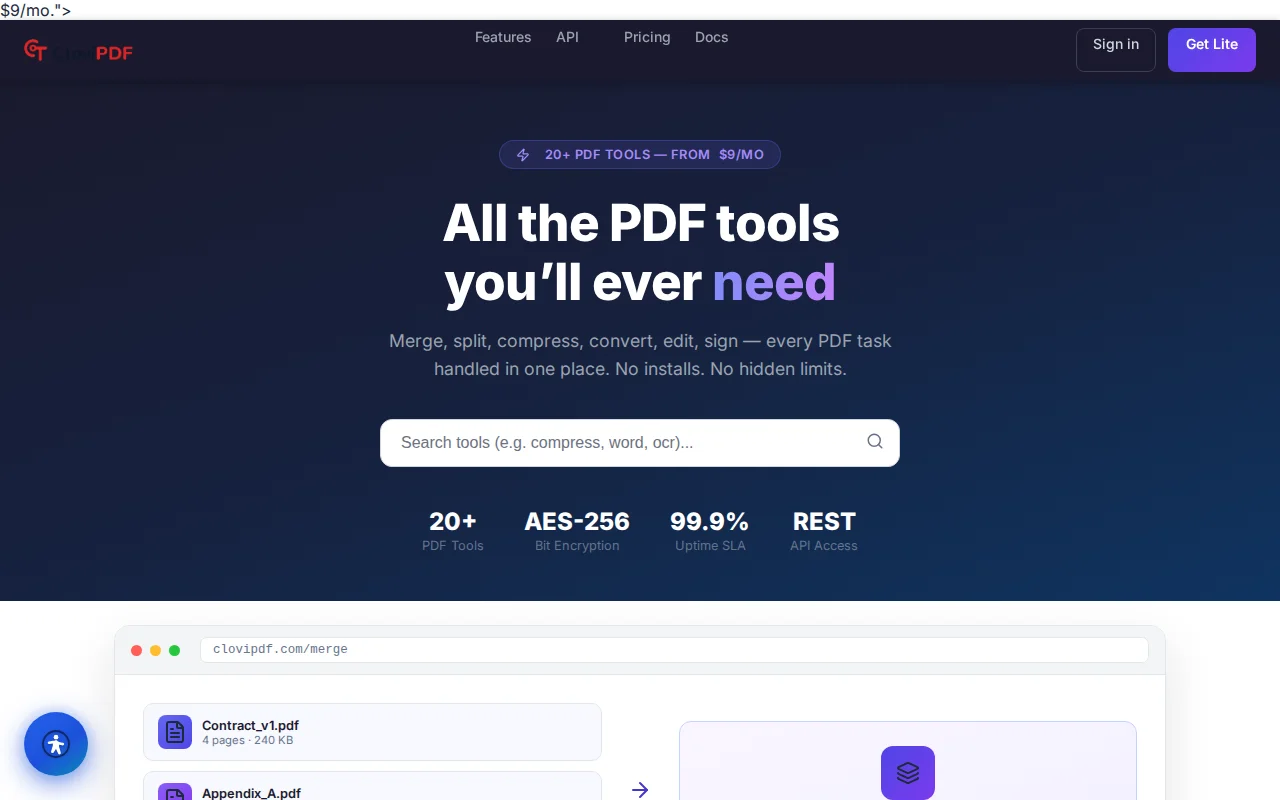 CloviPDF →Every PDF tool in one place.
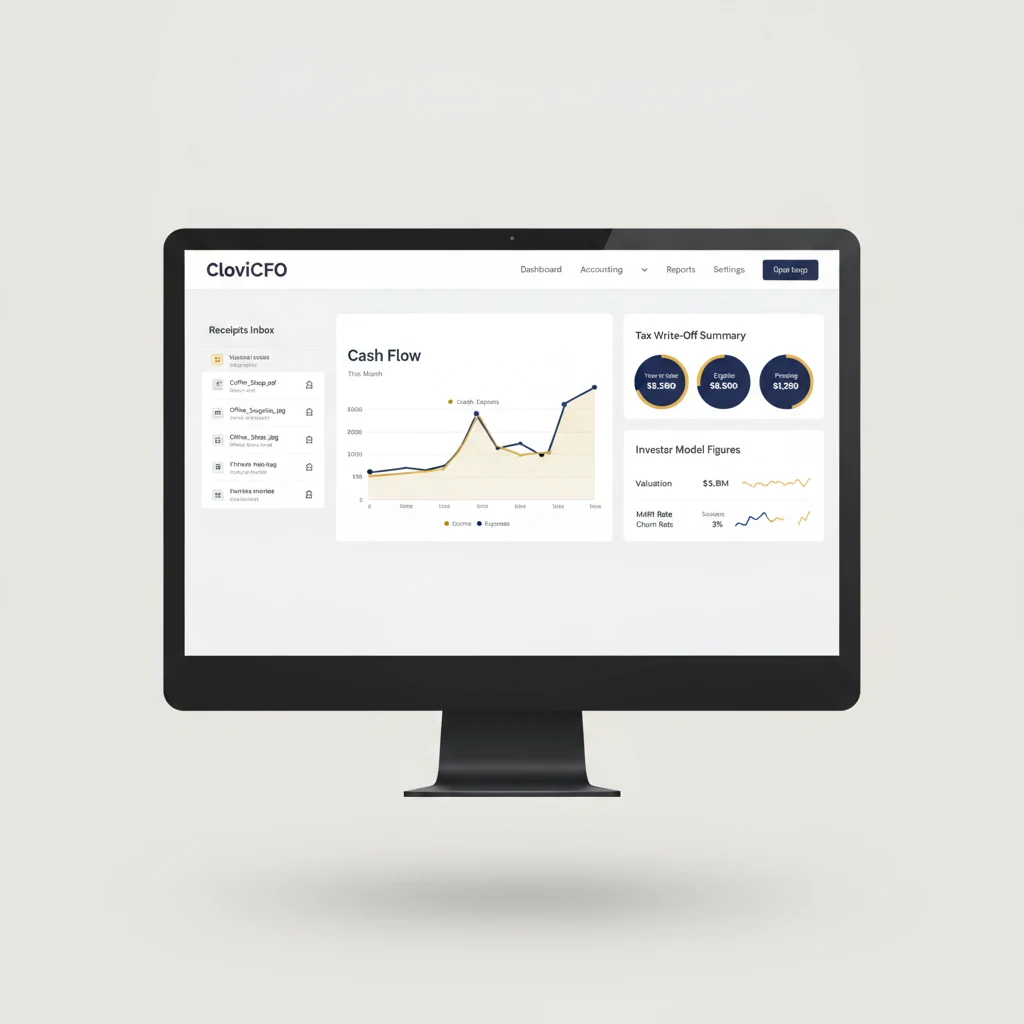 CloviCFO →Your AI CFO plus a full accounting platform.
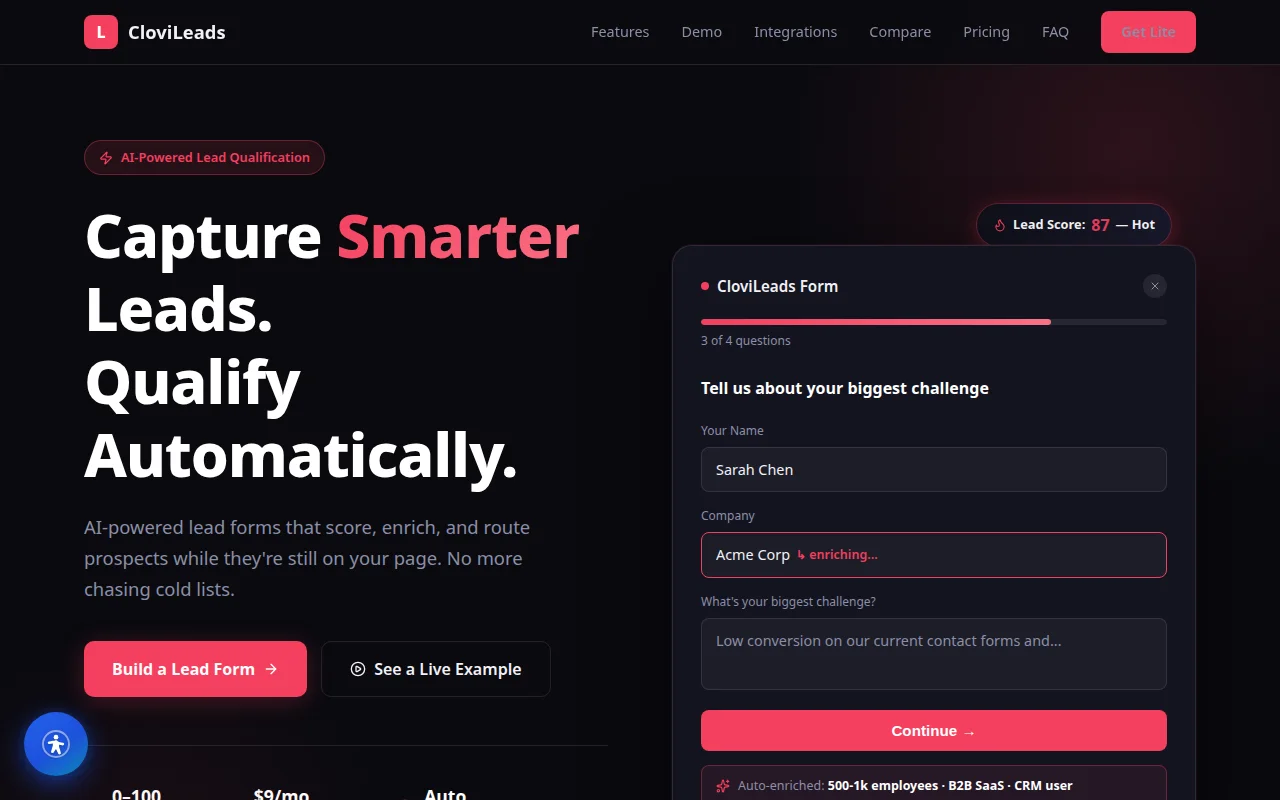 CloviLeads →AI lead capture and qualification.
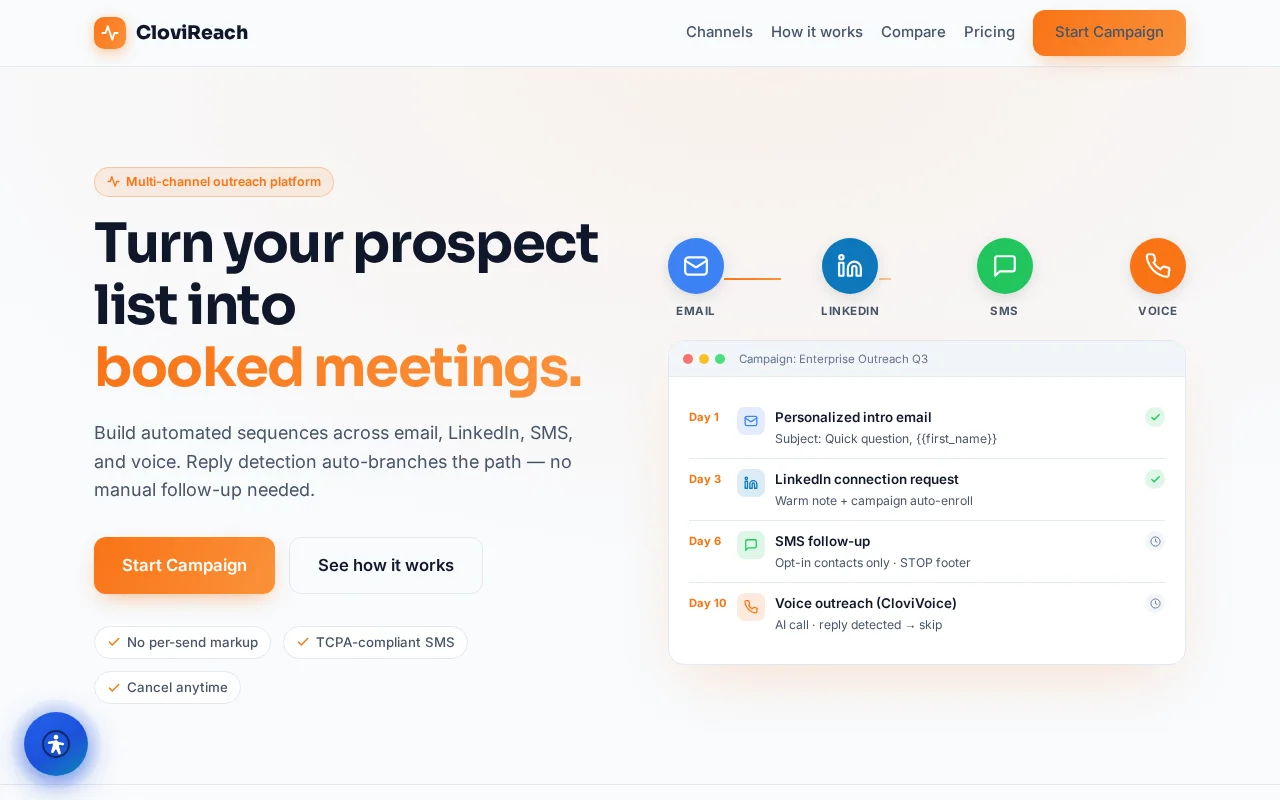 CloviReach →Turn a cold list into booked meetings.
 CloviBrand →A full brand identity, not just a logo.
 CloviQR →QR codes that stand out and report back.
 CloviAgent →Build AI agents without writing code.
 CloviDecks →AI decks that speak for themselves.